Friday, 2 January 2015

source: 

Having trouble keeping up with your family's garbage output? Putting a bit more thought into the way you manage your household waste can help you get more organized. With careful planning, you'll be able to save money and have less of an impact on the environment. See Step 1 to find out how to deal with garbage, food scraps, and recyclables.

Part 1 of 3: Reducing Your Garbage

  1. Manage Your Home Waste Step 1 Version 2.jpg
    Use cloth bags instead of plastic. This small measure will greatly reduce the amount of waste you bring into your house. No matter where you're shopping, you can bring your own reusable cloth bags instead of accepting plastic bags from the store. Plan ahead by purchasing several reusable bags and storing them where you won't forget to bring them along next time you go shopping, like in your kitchen or in the trunk of your car.
    • If you forget to bring your cloth bags to the store, you can still reduce waste! Ask the person bagging your groceries not to use double bags. Most stores now sell cloth bags, so you could spring for those instead of accepting plastic or paper - you can never have enough around the house.
    • Using cloth bags isn't limited to grocery shopping. Take one along when you go shopping for clothes, tools, or any other items you may need.
  2. Manage Your Home Waste Step 2 Version 2.jpg
    Buy food that has less packaging. If you tend to buy food that comes in boxes wrapped in plastic with individually-wrapped serving sizes inside, you're probably producing more waste than you want to. Look for ways to buy food with minimal packaging, especially plastic packaging, and you'll see your daily mound of garbage turn into a tiny hill. Here are a few tricks to try:
    • Use the bulk food section. You can buy rice, beans, cereals, teas, spices, and other dry foods in the bulk food section of your grocery store. Store the foods in airtight glass or plastic containers when you get home.


  3. Do vermicomposting. You can make your own worm composting system.
    • Make dinner instead of heating it up. Take-out food and microwaveable dinners require a lot of packaging, and it all just goes in the trash. It definitely takes more time, but consider replacing some of your instant meals with homemade creations. Your waistline will thank you, too.
    • Buy dairy items in containers you can return. An increasing amount of dairy companies offer a return system in which you buy a glass jug of milk, cream or buttermilk and return the jug for a deposit. This is a great way to cut down on using plastic.
    • Buy from farmer's markets. They offer mounds of fresh produce that have never touched plastic. Bring along cloth bags to carry your purchases home.
  4. Manage Your Home Waste Step 3 Version 2.jpg


    4.   Don't use bottled drinks unless you have to.[1] Bottled water - and other bottled drinks - are a major source of waste in many places. In some places bottled water is safer to drink than tap water, but if that's not the case in your area, consider using tap water instead. You can always filter the water if you don't like the way it tastes. This is more economical and much better for the environment.
    • If you really want to go the distance, you can nix other bottled and canned drinks, too. For example, instead of buying a case of ginger ale, why not make your own? Homemade lemonade and limeade are also great choices.
    • If you do choose to buy drinks by the bottle, choose large containers, rather than small ones. Get a 5 gallon (18.9 L) container of water with a dispenser instead of buying an 18-pack of small bottles.
  5. Manage Your Home Waste Step 4 Version 2.jpg
     
     
    5    Reduce your paper usage. If you like using computers, there are very few reasons you still need to have a lot of paper waste in your house. Taking measures to reduce the amount of paper you buy, as well as the amount of paper that gets sent to you in the mail, can save you the headache of having to sort through piles of papers.
    • Go paperless when it comes to bills; choose to pay them online instead.
    • Consider reading your news online instead of having a newspaper delivered to your house.
    • Take measures to stop junk mail from overflowing your mailbox.
  6. Manage Your Home Waste Step 5 Version 2.jpg
    Consider making your own household cleaners and detergents. Many of the containers used for cleaners and detergents aren't recyclable, so they end up going in the garbage. If you have the time and inclination, making your own formulas and storing them in glass containers will end up saving tons of money and significantly reduce your garbage output. You'll also end up creating a chemical-free environment for your family. Here are a few great recipes to try:

Part 2 of 3: Reusing and Recycling

  1. Manage Your Home Waste Step 6.jpg
    1
    Donate items when possible. If you have old clothing, electronics, or other items you don't want but are still in decent shape, donate them instead of throwing them out in the trash. Better they end up in a classroom or someone's closet than the landfill.
    • Old clothes and fabric scraps can be donated to a fabric recycling facility.
    • Schools often accept donations of old computers and other electronics.
    • Contact a local homeless shelter or donation center to see about donating furniture, electronics, cars, and any other items you're finished using.
  2. Manage Your Home Waste Step 7.jpg
    2
    Reuse containers. Durable containers can be reused a number of times before they need to go out with the garbage or recycling. Bottles, boxes and bags can all serve a second purpose if you know how to use them.
    • Use paper bags to hold recyclables, if you don't have a bin. You can also use them to fashion book protectors - a flashback to grade school days.
    • Reuse paper by printing on both sides, or letting your children draw on the back of used paper.
    • Use food-grade glass containers (that didn't previously contain anything toxic) to store dry goods and leftovers.
    • Plastic containers are fine to use for storage, but be careful about reusing them too many times to store food. Plastic, even if it's food-grade plastic, can eventually break down and start leaching chemicals into the food.
  3. Manage Your Home Waste Step 8.jpg
    3
    Follow your city's recycling policies. In some places you need to sort plastic, glass, and paper recyclables and and turn them in separately, while other cities allow you to place all recyclables in the same bin and be done with it. Some cities provide recycling pickup, while other places have a recycling center where you can drop everything off. Check your city's website and follow its policy regarding proper recycling.
    • In general, the following household waste can be recycled:
      • Plastic containers numbered 1 - 7[2]
      • Paper products like computer paper, egg cartons, newspaper, and cardboard
      • Glass containers
      • Aluminum cans, aluminum foil
  4. Manage Your Home Waste Step 9.jpg
    4
    Dispose of trash and hazardous waste properly. There are some household items that just can't be recycled or reused. These items have to be thrown out with the trash or disposed of at a hazardous waste facility. Try to reduce your consumption of the following items, and when you do use them, dispose of them according to your city's laws:
    • Batteries
    • Paint
    • TVs, computers, and other electronics
    • Light bulbs

Part 3 of 3: Composting

  1. Manage Your Home Waste Step 10.jpg
    1
    Save your food scraps and yard cuttings from the trash. Food scraps and yard cuttings don't need to be thrown out. Instead, you can compost them and turn them into rich, nutritious soil that can be used to nourish your garden - or donated to someone else who will be able to use it for theirs. There are many ways to compost; some compost mixtures allow for items like meat and dairy to be included, while others are strictly for fruit and vegetable scraps. To start a basic compost pile, save these items:
    • Green items, which break down quickly, like raw vegetable peelings, coffee grounds, tea bags, grass cuttings, leaves
    • Brown items, which break down slowly, like sticks and branches, paper, cardboard, eggshells, sawdust
  2. Manage Your Home Waste Step 11.jpg
    2
    Create a compost site. Select an area in a sunny or partially shaded spot in your yard for your compost site. Ideally, you'll compost directly over dirt or grass, but if you don't have a large yard area, you can compost on a concrete patio. Here are a few different ways you can structure your compost site:
    • Make a compost pile. This is the simplest way to compost. All you have to do is make a pile in your yard. It should be located well away from your house, since composting sometimes attracts mice and insects.
    • Make a compost box. You can construct a box made to the exact dimensions that suit your needs.
    • Buy a compost bin. They're available at most home and garden stores, and come in a variety of different shapes and sizes.
  3. Manage Your Home Waste Step 12.jpg
    3
    Choose to make either a cold or hot compost heap. Making a cold heap requires less effort, but it takes longer for the compost to be ready. Making a hot heap requires a little work, but you'll have compost in as little as 6 - 8 weeks. Here's the difference:
    • To make a cool compost heap, fill your bin with a few inches of both green and brown materials. Keep piling more in whenever you need to get rid of food scraps or toilet paper rolls. When the bin is full, leave it to compost. It may take up to a year to full compost, but you can use the compost forming at the bottom of the bin as needed.
    • To make a hot compost heap, mix your green and brown materials well, and fill your bin all the way up (or heap up a big pile). It will warm up and get hot to the touch; when this happens, stir it up, and it will cool. When it heats up again a few days or weeks later, stir it up again. Keep doing this until it stops heating up after you stir, then let it rest to finish composting.
  4. Manage Your Home Waste Step 13.jpg
    4
    Maintain your compost site. If it seems to be rotting too fast and turning slimy, add more brown items to slow it down. If it seems to be too dry to work its magic, add some water or more green items. The more effort you put into tending to your compost site, the faster you'll have usable compost.
  5. Manage Your Home Waste Step 14.jpg
    5
    Use your compost when it's ready. You'll know your compost is ready when it turns a rich brown or black color and takes on an earthy smell. Your compost can be used to fertilize your vegetable or flower garden, or you can simply spread it around your yard to give your grass and other plants a nutrition boost.


WASTE REDUCTION TIPS


Practical ways to reuse waste at home

  • Take unwanted toys and books to hospitals, early childhood education centres or schools. 
  • Give unwanted clothes to opportunity shops or used clothing bins. 
  • Use empty plastic packaging containers for freezing or storing food items. 
  • Save wrapping paper and boxes to use again. 
  • Use old jars for storage or for homemade jam or preserves. 
  • Take old magazines to your local doctors' or dentists’ surgery. 
  • Shop at second hand stores or use trading websites and classifieds to purchase items that are unwanted by others. 
  • Donate household items or shop at your council’s resource recovery centre. 


Practical ways to reuse waste at work

  • Donate old computers to schools or community education centres. 
  • Use waste packaging on inward goods e.g. boxes and wooden pallets, for storing materials or for dispatching your own product.   
  • Make memo pads out of waste paper.   
  • Re-use envelopes - purchase reuse labels.   
  • Use second hand stores, trading websites and classifieds to buy and sell used items. 
  • Register with your local waste exchange programme. 

HA Schult made Sculpture
http://www.greendiary.com/2011-artwork-waste.html 

Tuesday, 28 October 2014

THE CASE OF RECYCLING
"The issue is that for too long now we have let privately-owned waste management companies dictate what is recyclable. We understand now that everything can be recycled, but there isn’t enough profit to entice most companies into doing it. The real money maker is solid waste, or garbage."

packagingdigest.com packagingdigest.com

packagingdigest.com
How is it that we cant manage our refuse before it swallows us?
facebook.com

    Source: fashionindustrynetwork.com
Last 10 years we watch a global shift from end of pipe waste management to waste prevention and reuse concepts. This shift clearly moves us closer to resource management optimization processes rather than the typical waste management activities. It concerns more industrial supply chains than the waste management industry and the usual end of pipe solutions.

But at the same time it provides a new practical view on how we deal with waste. It helps us a lot to understand waste as an indication of inefficient production and consumption patterns. In other terms, it helps us to understand that Waste is a Choice, as my friend Maarten Goorhuis (ISWA STC Vice-Chair and Chair of the ISWA Working Group on Recycling and Waste Minimization) usually says starting his presentations about waste prevention.

A good example of that way of thinking is given by some initiatives in the textile & clothing manufacturing sector. The real importance of them is that they try to combine effectiveness in waste prevention by utilizing personal attitudes and behavioral trends. Let’s see more details.

We all know that rapidly changing fashions increase the production and consumption of textiles and clothing. And definitely, they also increase the amount of end of life clothes that are driven to waste, in one or another way. Despite improvements in the environmental impacts in the manufacture of textile and clothing over the last 25 years, the overall volume of production and consumption of these products has increased. The relocation of manufacturing from Western countries to Asian nations and more efficient production has reduced the cost of clothing and textiles, but this has had the unintended consequence of increasing consumption and counteracting some of the environmental benefits of new manufacturing technologies.

In addition, the fast cycles of fashion and deliberately planning products to have a limited lifespan have shortened the life cycle of textiles and clothing. Garments have become cheaper, the quality reduced and clothes are typically worn for only a short time before disposal. Although reuse and recycling of clothing has also increased, this only partly offsets the increased levels of textile consumption, the proliferation of textile waste, and the environmental and social impacts, (such as where and how fibres are cultivated) associated with higher volumes of textiles and clothing production. 


A recent study (Niinimäki, K., Hassi, L. (2011) Emerging design strategies in sustainable production and consumption of textiles and clothing. Journal of Cleaner Production 19: 1876-1883) provided the suggestion that a more sustainable production and consumption of clothing could be achieved if consumer values are used to rethink design and business strategies. A good example could be an increased personalization of clothing that could increase both consumer attachment to products and their useful lifetime.

The study explored different design strategies that increase the lifespan of textiles and clothing by making the consumer the centre of the innovation processes. It argues that innovative thinking about how consumers experience and value textiles and clothes is needed for more sustainable production and consumption.

For example, the use of a product could be extended if it is designed to be personalized. This would allow consumers to develop an emotional attachment with the garment or textile and can be achieved by mass customization of products using fast digital manufacturing technologies that enable consumers to select from a variety of styles and colors to design their own look. Digital textile printers, embroidery and laser cutting machines can design products tailored to an individual’s specifications.

The manufacture of ‘halfway products’, for example, kits that offer consumers the opportunity to creatively assemble (and repair) the product could also increase attachment and usage, as could clothing designed with detachable parts that can be customized by the consumer.
In addition, designers can co-create products with consumers to increase attachment to the product, for example, through the internet, with consumers making the final design decisions. Services that focus on consumer needs can also be used to extend the lifetime use of textiles and clothing and postpone product replacement. For example, high-quality garments that can be used in renting, leasing, lending or sharing schemes; and services that modify the garments can all be offered. New business opportunities could be found in this switch to a services-orientated economy; manufacturers can offer higher quality garments, increase customer satisfaction and extend the use of the product. 

At least, we hope that this may be a succesful initiative - after all if waste prevention becomes trendy, there will be positive impacts worldwide, especially in the global interconnected cities where fashion plays a crucial role...
Posted by Antonis Mavropoulos


It seems that there is a growing doubt regarding the efficiency and the results that will be achieved through the Carbon market.
Even worst, recent findings document that there is a potential for a Carbon Bubble which will have tremendous negative effects to carbon trading and subsequently to the efforts for Climate Change abatement.
Here are some of the latest developments, as they are described in the Carbon Tracker report available at the relevant web-site
The Carbon Tracker initiative is a new way of looking at the carbon emissions problem. It is focused on the fossil fuel reserves held by publically listed companies and the way they are valued and assessed by markets. Currently financial markets have an unlimited capacity to treat fossil fuel reserves as assets. As governments move to control carbon emissions, this market failure is creating systemic risks for institutional investors, notably the threat of fossil fuel assets becoming stranded as the shift to a low-carbon economy accelerates.
According a research made by the Potsdam Institute, in order to reduce the chance of exceeding 2°C warming to 20%, the global carbon budget for 2000-2050 is 886 GtCO2. Minus emissions from the first decade of this century, this leaves a budget of 565 GtCO2 for the remaining 40 years to 2050.
But the total carbon potential of the Earth’s known fossil fuel reserves comes to 2795 GtCO2. 65% of this is from coal, with oil providing 22% and gas 13%.
This means that governments and global markets are currently treating as assets, reserves equivalent to nearly 5 times the carbon budget for the next 40 years. The investment consequences of using only 20% of these reserves have not yet been assessed!
The fossil fuel reserves held by the top 100 listed coal companies and the top 100 listed oil and gas companies represent potential emissions of 745 GtCO2. This exceeds the remaining carbon budget of 565 GtCO2 by 180 GtCO2.This means that using just the listed proportion of reserves in the next 40 years is enough to take us beyond 2°C of global warming. On top of this further resources are held by state entities.
 Given only 20% of the total reserves can be used to stay below 2°C, if this is applied uniformly, then only 149 of the 745 GtCO2 held by listed companies can be used unabated. Investors are thus left exposed to the risk of unburnable carbon. If the 2°C target is rigorously applied, then up to 80% of declared reserves owned by the world’s largest listed coal, oil and gas companies and their investors would be subject to impairment as these assets become stranded.
The top 100 coal and top 100 oil & gas companies have a combined value of $7.42 trillion as at February 2011. The countries with the largest greenhouse gas potential in reserves on their stock exchanges are Russia, (253 Gt CO2), the United States, (156.5 Gt CO2) and the United Kingdom, (105.5 Gt CO2). The stock exchanges of London, Sao Paulo, Moscow, Australia and Toronto all have an estimated 20-30% of their market capitalization connected to fossil fuels.
The UK has less than 0.2% of the world’s coal, oil and gas reserves, and accounts for around 1.8% of global consumption of fossil fuels. Yet the CO2 potential of the reserves listed in London alone account for 18.7% of the remaining global carbon budget. The financial carbon footprint of the UK is therefore 100 times its own reserves.
London currently has 105.5 GtCO2 of fossil fuel reserves listed on its exchange which is ten times the UK’s carbon budget for 2011 to 2050, of around 10 GtCO2. Just one of the largest companies listed in London, such as Shell, BP or Xstrata, has enough reserves to use up the UK’s carbon budget to 2050. With approximately one third of the total value of the FTSE 100 being represented by resource and mining companies, London’s role as a global financial centre is at stake if these assets become unburnable en route to a low carbon economy.
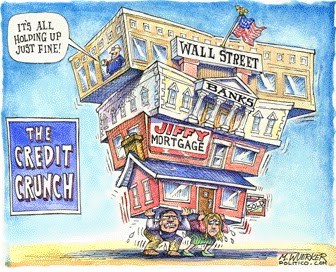
The Carbon Tracker report mentions that “In the past decade investors have suffered considerable value destruction following the mispricing exhibited in the dot.com boom and the more recent credit crunch. The carbon bubble could be equally serious for institutional investors – including pension beneficiaries - and the value lost would be permanent”.
The authors believe (and I also share the same opinion) that today’s financial architecture is not fit for purpose to manage the transition to a low-carbon economy and serious reforms are required to key aspects of financial regulation and practice firstly to acknowledge the carbon risks inherent in fossil fuel assets and then take action to reduce these risks on the timeline needed to avoid catastrophic climate change.
They also add that “The regulatory regimes covering the capital markets need realigning to provide transparency for investors on the assumptions behind valuing unburnable carbon. With the global economy following the fortunes of the financial sector, it is essential to create capital markets which are robust enough to deliver an economy which can prevent dangerous climate change. Unless a more long-term approach is required by regulators, the shift in investment required to deliver a low carbon future will not occur.”
Posted by Antonis Mavropoulos

The Ebola pandemic is officially out of control. The situation in Liberia, Guinea and Sierra Leone gets worse day by day. Just for Liberia and Sierra Leone, at the end of September 2014, it is estimated that there are approximately 8,000 total Ebola cases (21,000 total cases when corrected for underreporting).

With the current level of interventions, it is forecasted that on January 2015, without substantial changes in community behavior, a model estimates that Liberia and Sierra Leone will have approximately 550,000 Ebola cases (1.4 million when corrected for underreporting).
One of the most important measures required is appropriate management of corpses – waste management during pandemics is a key-element in the effort to contain the viruses’ expansion. Leaving dead people in the streets or simply transfer them to open dumpsites is a certain contribution that make things much more difficult. Up to now, no one knows what is the fate of corpses, so we better get prepared for the worst case.
The news about the expansion of Ebola cases in USA and Europe are also striking. The so-called “advanced” security measures in USA and Europe proved completely incapable to stop the Ebola expansion. Many holes in the current protocols and inefficient preparation and training   were identified. Austerity measures left their footprints in emergency care too, creating additional barriers to an appropriate response. And the psychological weakness of “it is impossible to happen to us” has made an important contribution to the delays in identifying the infected nurses.
This is not a business as usual case. It is a serious global health risk, a pandemic that challenges our ideas and concepts regarding vulnerability, international cooperation and poverty.
First, speaking for Liberia, Sierra Leone and Guiana, it seems that weak governance and administrative structures in national and local healthcare systems are completely unsuitable to manage such a pandemic, despite the heroic efforts of healthcare personnel and the contributions of volunteers, like the “Doctors Without Borders”.
Second, international aid mechanisms and tools are incapable to coordinate a global effort to control the pandemics – this is not the first time we realize it, but for sure it will be probably the worst for the last decades. International response to Ebola came too late and it is too weak.  And there will be a very high cost for it.
It is time to realize that in our interconnected world, where decades millions of people travel by airplane, cars, trains on a daily basis, no border can stop the expansion of pandemics, unless they are immediately spotted and controlled.
It is time to realize that as long as many countries are trapped to the so called “poverty trap” no citizen in rich western societies can feel safe.
We certainly know that the lack of a sound waste collection and disposal system creates health problems – now we realize that during pandemics, this is a lethal lack. Have a look at the recent Waste Atlas report  and you will find that 50 huge dumpsites serve more than 60 million people - what are waiting for closing them? They will never be closed by local efforts due to the poverty trap.
It is time to understand that global interconnectivity is growing exponentially faster than global cooperation and appropriate institutional development. The current international aid tools correspond to the Cold War Era, while the current global risks correspond to the post 9/11 world. The same pattern identified in climate change discussions (too slow, too late) is again identified in Ebola response.
The Ebola drama just started – let’s hope that besides the thousands of losses that are expected, it will also create a wave of change for our outdated international cooperation systems. And this is mostly for the developed countries that should take the lead and implement a new system of global cooperation patterns and initiatives.  Otherwise, no one is safe!

Posted by Antonis Mavropoulos